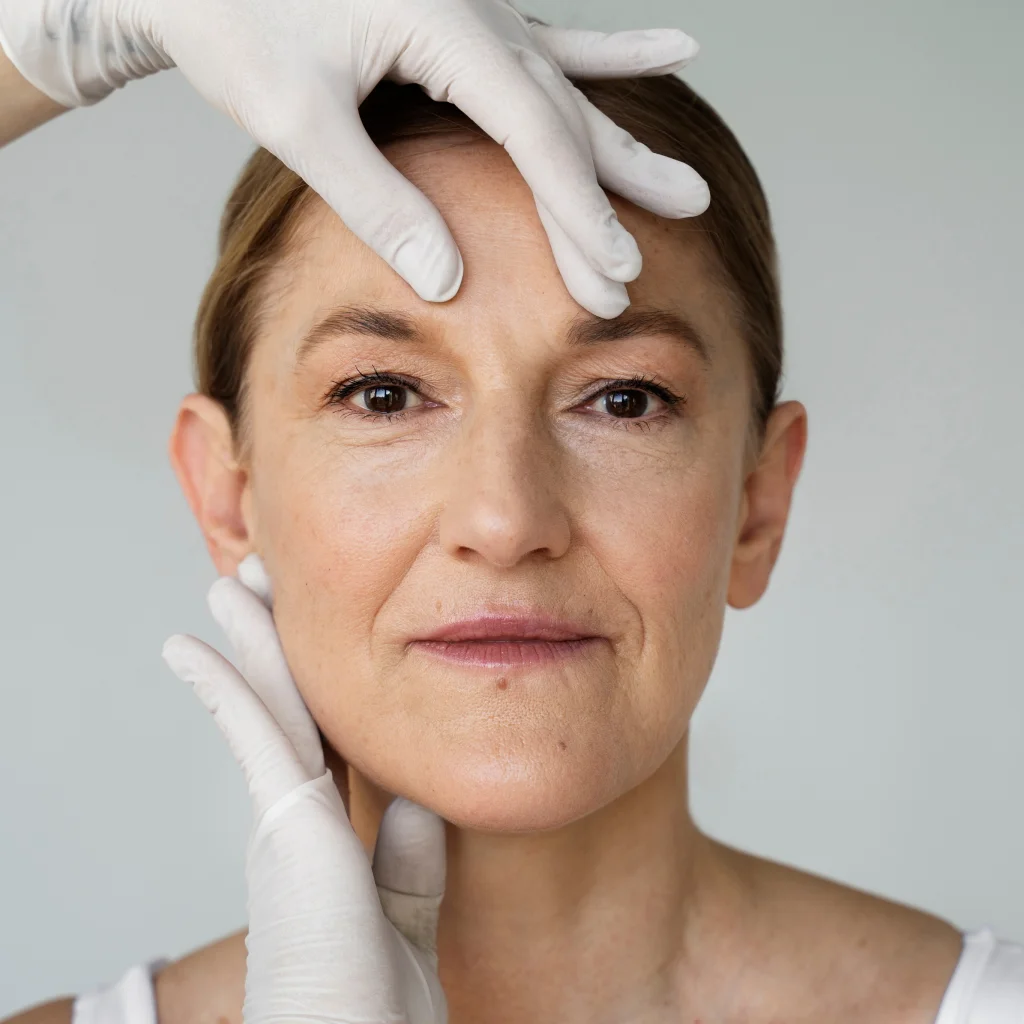
Different areas of the face require different types of dermal fillers. Learn how filler properties are selected for the lips, cheeks, chin, jawline, under-eye area, nose, and more.


Dermal fillers can do much more than simply add volume. Depending on the product and injection technique, fillers may help define the jawline, enhance the lips, restore volume to the cheeks, soften facial folds, or improve certain types of under-eye hollowness.
However, the same filler is not necessarily suitable for every part of the face.
Different treatment areas require different levels of firmness, flexibility, cohesiveness, and lifting capacity. A filler that works beautifully for chin projection may be completely inappropriate for the delicate under-eye area.
Understanding these differences can help patients have a more informed consultation and achieve results that look balanced and natural.
Why Filler Choice Matters
Most modern dermal fillers used for facial contouring are based on hyaluronic acid (HA), a substance naturally present in the skin. But not all HA fillers behave in the same way.
Some products are soft and flexible, allowing them to move naturally with facial expressions. Others are firmer and provide greater structural support. Certain fillers spread smoothly through superficial tissues, while others are designed to maintain shape when placed deeper in the face.
The ideal filler depends on several factors:
- Treatment area
- Skin thickness
- Existing facial anatomy
- Amount of volume loss
- Desired degree of projection or definition
- Depth of injection
- Natural facial movement
- Previous filler treatments
Rather than asking which filler brand is “the best,” it is often more useful to ask which filler characteristics are best suited to your specific treatment area.

Filler selection should be based on facial anatomy, treatment area and the desired result.
Lips: Softness and Flexibility
Lip filler needs to move naturally. Because the lips are constantly moving while speaking, smiling, eating, and expressing emotion, excessively firm filler may produce an unnatural appearance or feel.
For this reason, softer and more flexible hyaluronic acid fillers are commonly selected for lip augmentation.
Depending on the patient's goals, filler can be used to:
- Increase lip volume
- Improve lip symmetry
- Define the vermilion border
- Enhance the Cupid's bow
- Improve vertical lip proportions
- Provide subtle hydration and smoothness
The amount of filler is equally important. More volume does not automatically create a better result. For patients seeking a natural appearance, conservative treatment performed gradually can often provide better control over the final shape.
Cheeks: Structure and Lifting Support
Cheek augmentation usually requires a filler with more structural strength than lip treatment.
When volume is lost in the midface, the cheeks may appear flatter and the transition between the lower eyelid and cheek can become more pronounced. A firmer HA filler placed strategically in deeper tissue planes may help restore projection and support.
Cheek filler can be used to:
- Restore age-related volume loss
- Enhance cheekbone definition
- Improve facial proportions
- Create greater midface projection
- Support surrounding soft tissues
The objective is not necessarily to make the cheeks larger. Good cheek augmentation should complement the patient's existing bone structure and overall facial proportions.
Under-Eye Area: Lightweight and Carefully Selected
The tear trough is one of the most technically demanding areas for filler treatment. The skin around the eyes is extremely thin, and inappropriate filler selection or placement can result in visible irregularities, persistent swelling, or an unnatural appearance.
When filler is appropriate, practitioners generally prefer products that integrate smoothly into the tissues and do not create excessive volume.
However, not every under-eye concern should be treated with filler. Prominent eye bags, significant skin laxity, malar edema, or certain anatomical characteristics may make other treatments more appropriate.
For this reason, careful assessment is particularly important before undergoing tear-trough filler treatment.
Chin: Firm Filler for Projection and Shape
Chin augmentation has a very different objective from lip or under-eye treatment. Here, filler is often being used to simulate or enhance skeletal projection.
A relatively firm filler with good shape retention may therefore be selected.
Chin filler can help:
- Increase chin projection
- Improve facial profile
- Lengthen the appearance of a short chin
- Improve chin symmetry
- Create a more defined transition into the jawline
Small changes to chin projection can sometimes significantly influence overall facial proportions, particularly when the face is viewed from the side.
Jawline: Definition Requires Structural Support
Jawline contouring typically requires a filler capable of maintaining definition. Depending on facial anatomy, injections may be placed along selected areas of the mandibular border or near the angle of the jaw.
The goal may be to create:
- A sharper jawline
- Better separation between the face and neck
- Improved lower-face symmetry
- A stronger mandibular angle
- A smoother transition between the chin and jaw
Jawline filler is not a replacement for treatment of significant skin laxity or excess fat. In some patients, lifting treatments, fat reduction, muscle treatment, or surgery may address the underlying concern more effectively than simply adding filler.
Nose: Precision and Shape Retention
Nonsurgical rhinoplasty uses filler to alter the visual contour of the nose without surgery. Because very small changes can significantly affect nasal appearance, filler selection and injection technique are particularly important.
A filler with sufficient structural support may be used to:
- Smooth selected irregularities along the bridge
- Improve the appearance of a small dorsal hump
- Increase bridge height
- Improve selected asymmetries
- Create subtle changes in nasal proportions
Important: Nasal filler is considered an advanced treatment area because important blood vessels are located around the nose. It should only be performed by an appropriately trained and experienced medical professional who understands facial vascular anatomy and the management of filler complications.
Nasolabial Folds: Balance Is More Important Than Erasing the Line
Nasolabial folds extend from the sides of the nose toward the corners of the mouth. Although filler can be placed directly into these folds in selected patients, the cause of the fold should first be evaluated.
Sometimes the fold becomes more prominent because of midface volume loss or changes in surrounding facial tissues. In these cases, treating only the line may not provide the most natural result.
A practitioner may therefore assess the cheeks and surrounding facial structure before deciding where filler should be placed. The goal is usually to soften the fold rather than completely erase a normal anatomical feature.
Temples: Smooth Integration and Volume Restoration
Hollow temples can make the upper face appear narrower or more skeletal. Temple filler can restore volume and create a smoother transition between the forehead, temples, and cheekbones.
Temple augmentation can help:
- Restore age-related volume loss
- Improve facial contour
- Reduce the appearance of temporal hollowness
- Create smoother upper-face proportions
Like the nose, the temple contains important vascular structures, so treatment requires detailed anatomical knowledge.
Forehead: Subtle Contouring
In selected patients, filler can be used to improve forehead contour and create a smoother profile.
This treatment is particularly popular in Korea and other parts of Asia, where a gently rounded forehead may be desired as part of overall facial balancing.
The filler must integrate smoothly while providing enough support to achieve the intended contour. Because the forehead also contains important blood vessels, injections in this area should be performed conservatively by an experienced medical professional.
Hyaluronic Acid vs. Collagen-Stimulating Injectables
Not every injectable treatment works like a traditional HA filler.
Hyaluronic acid fillers primarily provide immediate physical volume and contouring.
Collagen-stimulating injectables work differently. Depending on the product, they are designed to stimulate gradual collagen production and improve tissue quality or volume over time.
These treatments may be considered for patients who want broader improvement rather than precise contouring of a small anatomical feature. The choice between HA filler and a collagen-stimulating treatment depends on the patient's anatomy, treatment goals, desired timeline, and the area being treated.
Korean vs. International Filler Brands
Korean aesthetic clinics often offer both Korean-manufactured fillers and international brands.
The appropriate choice should not be based on country of manufacture alone. More important considerations include the characteristics of the individual product, regulatory status, intended treatment area, injector experience, and the patient's goals.
Korean fillers may provide a more affordable treatment option in some clinics, while imported premium fillers may cost considerably more.
During consultation, patients can ask which specific product will be used and why it has been selected for that particular area.

The filler type, injection depth and amount should be selected individually for each treatment area.
Can Different Fillers Be Used During the Same Appointment?
Yes. In comprehensive facial contouring, a doctor may select different fillers for different areas.
For example, a patient could require a softer filler for the lips, a more supportive filler for the chin, and another product with different characteristics for the cheeks.
This approach allows treatment to be customized rather than using one product throughout the entire face. However, the number of areas treated and the total amount of filler should still be determined conservatively.
How Long Do Fillers Last?
There is no single duration that applies to every filler.
Longevity depends on the product, treatment area, amount injected, injection depth, individual metabolism, and facial movement.
Highly mobile areas such as the lips may behave differently from structurally treated areas such as the chin or cheeks.
Rather than selecting a filler solely because it is advertised as longer lasting, patients should consider whether its physical properties are appropriate for the intended area.
What Makes Filler Results Look Natural?
Natural-looking filler treatment depends on much more than the product itself. The injector must consider the entire face.
A technically successful lip augmentation, for example, can still look disproportionate if it does not complement the chin, nose, and overall facial structure.
Good facial contouring focuses on proportion rather than simply adding volume.
This may mean using a small amount of filler in several carefully selected areas—or recommending no filler at all in an area where another treatment would be more appropriate.
Choosing the Right Filler Treatment in Korea
Korean aesthetic clinics offer a wide range of dermal fillers and injectable treatments, from subtle lip enhancement to comprehensive facial contouring.
Before treatment, a medical consultation should evaluate your facial anatomy, skin condition, previous injections, and aesthetic goals.
If you have previously received fillers or other injectable materials, tell the doctor what product was used, where it was injected, and approximately when the treatment was performed.
This information can influence both product selection and injection technique.
LUXE BEAUTY HEALTH
Find the Right Filler Treatment in Korea
Not sure whether you need lip filler, cheek augmentation, chin contouring, under-eye treatment, or a combination approach?
Tell us which areas you would like to improve and what kind of result you prefer. Luxe Beauty Health can help you explore suitable aesthetic clinics and injectable treatment options in Korea based on your individual goals.
The final treatment plan, filler product, injection amount, and technique should always be determined after an individual medical consultation.
Request a Consultation