Laser rejuvenation belongs to radical methods, but still does not imply such serious intervention as with a scalpel. The penetration of the beam helps to combat wrinkles, acne, pigmentation or scars. What should those who decide to undergo it know about the procedure?

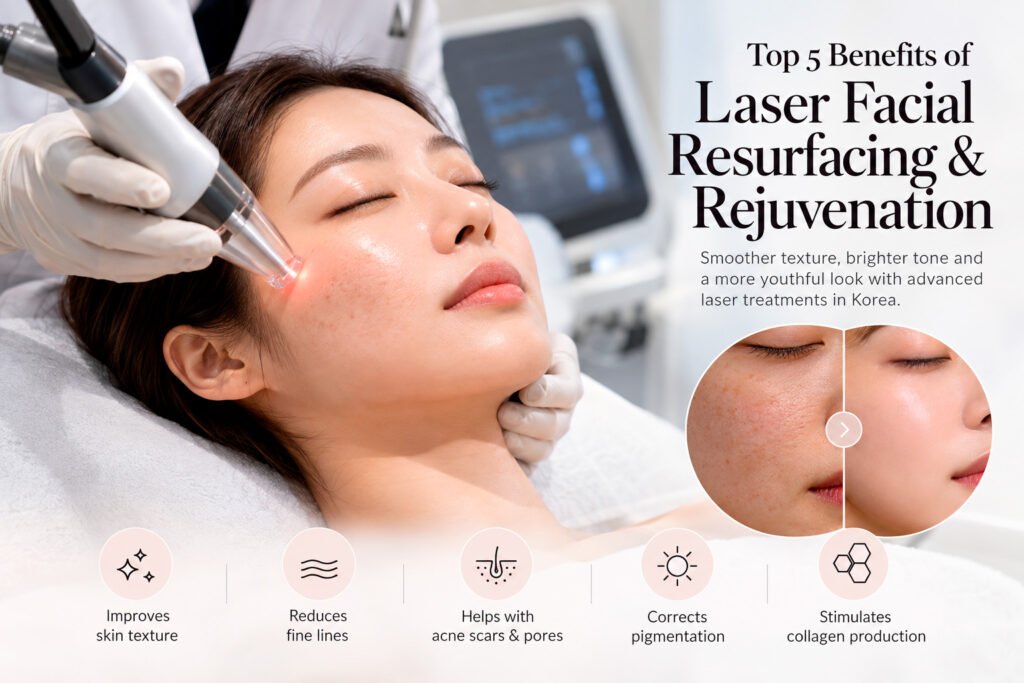
Laser facial resurfacing is one of the most effective non-surgical approaches for improving skin texture, pigmentation, fine lines, enlarged pores, and certain types of acne scars.
Modern laser technologies allow doctors to target specific layers of the skin and stimulate natural regeneration without traditional surgery. Depending on the device and treatment intensity, laser procedures can range from gentle treatments with minimal downtime to more intensive resurfacing designed for significant skin renewal.
In Korean dermatology and aesthetic clinics, laser treatments are often customized according to skin type, pigmentation tendency, existing skin concerns, and the amount of recovery time a patient can accept.
The five main benefits of laser facial resurfacing include:
1. Improvement of skin texture
Laser energy can help smooth rough or uneven skin and refine the overall appearance of the skin surface.
2. Reduction of fine lines
By stimulating collagen remodeling, certain laser treatments can gradually improve fine wrinkles and early signs of skin aging.
3. Improvement of acne scars and enlarged pores
Fractional laser technologies are commonly used to improve selected types of acne scarring, uneven texture, and visible pores.
4. Correction of pigmentation and sun damage
Depending on the type of pigmentation, selected laser devices may help reduce sun spots, uneven tone, and other areas of excess pigment.
5. Stimulation of collagen remodeling
Laser treatment can trigger a controlled healing response that encourages new collagen formation, helping the skin become smoother and firmer over time.
How Does a Laser Work?
Laser treatments deliver controlled light energy into selected layers of the skin. The wavelength, depth, pulse duration, and intensity determine which structures are targeted and how the skin responds.
Some lasers primarily target pigment or vascular structures, while resurfacing lasers create controlled microscopic areas of thermal injury in the skin. This activates the body’s natural repair process and stimulates the production and remodeling of collagen.
Fractional technologies treat only a portion of the skin at a time, leaving surrounding tissue intact. This can allow faster healing compared with traditional fully ablative resurfacing.
Different laser technologies may be selected for different concerns, including acne scars, fine wrinkles, pigmentation, enlarged pores, uneven texture, redness, or sun-damaged skin.
For this reason, there is no single “best laser” for every patient. The appropriate device and treatment parameters should be selected after evaluating the patient’s skin type, concerns, medical history, and desired recovery time.
How to Prepare For Laser Resurfacing?
Preparation depends on the type and intensity of laser treatment. Gentle laser procedures may require very little preparation, while deeper resurfacing treatments require more careful planning.
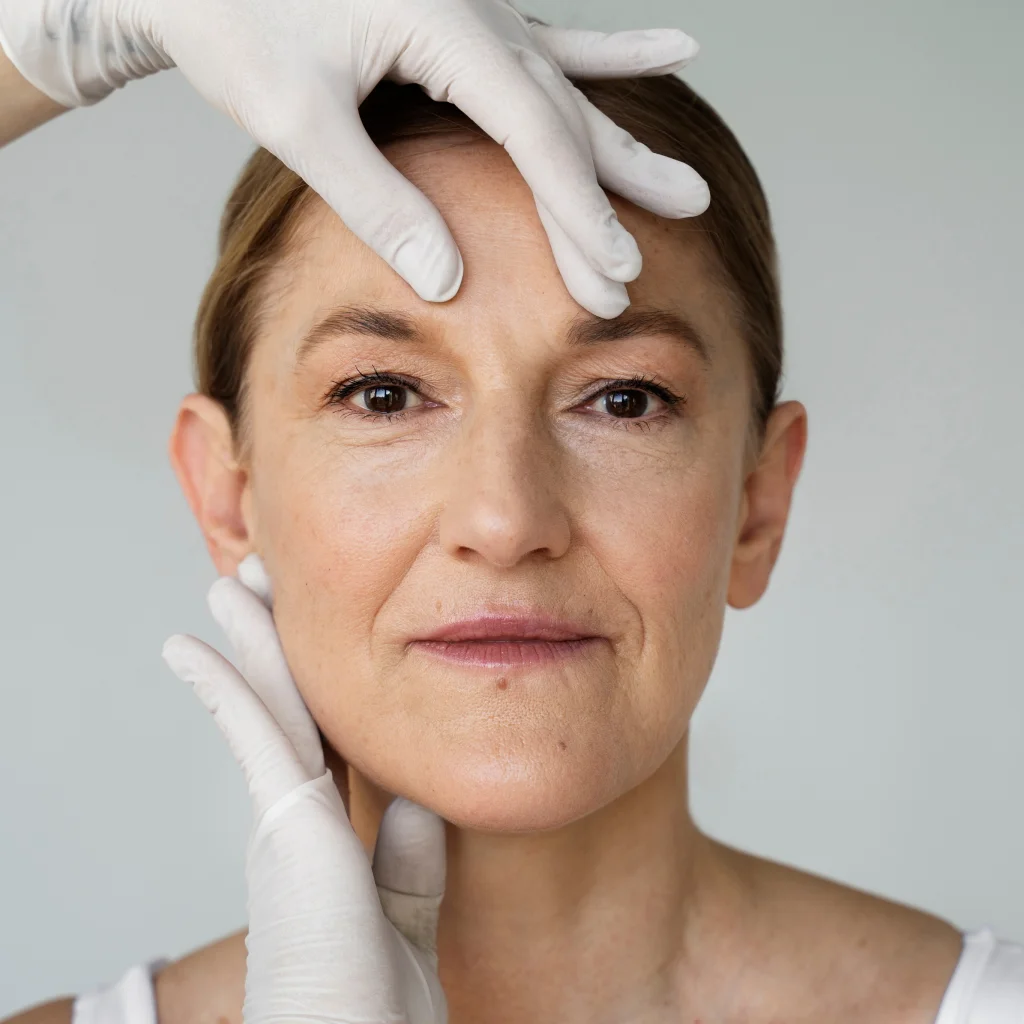
Before treatment, the doctor should evaluate your skin condition, pigmentation tendency, active inflammation, history of abnormal scarring, medications, previous aesthetic procedures, and any history of cold sores or other relevant skin conditions.
Patients are generally advised to protect their skin from excessive sun exposure before treatment and to use sunscreen consistently. Certain active skincare ingredients may need to be temporarily discontinued before stronger laser procedures, depending on the doctor’s instructions.
It is also important to tell the clinic about medications, supplements, recent injections, chemical peels, laser treatments, or other procedures performed on the treatment area.
For international patients visiting Korea, treatment planning should also take the travel schedule into consideration. More intensive resurfacing may cause redness, swelling, peeling, or crusting for several days, so sufficient recovery time should be planned before important events or long-distance travel.
Laser resurfacing should not be approached as a standard treatment with identical settings for every patient. Skin type matters significantly, particularly because some skin tones have a greater risk of post-inflammatory hyperpigmentation after aggressive laser treatment.
An experienced dermatologist or aesthetic doctor can adjust the device, energy level, treatment depth, and number of sessions according to the individual patient.
Types of Peeling
Chemical peels and laser resurfacing can address some similar concerns, but they work differently.
Chemical peeling uses carefully selected acids to remove or stimulate renewal of specific layers of the skin. Depending on the formulation and concentration, peels may be superficial, medium-depth, or deeper.
Laser resurfacing uses controlled light energy and allows doctors to adjust treatment depth and intensity with considerable precision. Fractional laser systems can also create microscopic treatment zones while leaving areas of surrounding skin intact.
In some cases, Korean dermatology clinics combine lasers, chemical peels, skin boosters, radiofrequency treatments, or other procedures as part of a staged skin-rejuvenation program.
The appropriate combination depends on the patient’s skin condition rather than simply performing as many treatments as possible.
What are The Disadvantages of the Procedure?
Although laser resurfacing can produce significant improvements, it is not suitable for every patient and it is important to understand the possible disadvantages.
Temporary redness, swelling, dryness, sensitivity, peeling, or crusting may occur after treatment. The intensity and duration depend largely on the laser technology and treatment depth.
More aggressive resurfacing generally produces a stronger skin-renewal effect but also requires longer recovery.
Pigmentation changes are another consideration. Some patients, particularly those prone to post-inflammatory hyperpigmentation, may develop temporary darkening of treated areas. Careful treatment settings and strict sun protection are therefore important.
Laser treatment also cannot correct every sign of facial aging. Significant skin laxity, deep folds, loss of facial volume, or structural changes may require other treatments such as lifting procedures, injectables, radiofrequency treatments, ultrasound-based treatments, or surgery.
Finally, some skin concerns require multiple sessions rather than a single treatment. Acne scars, enlarged pores, pigmentation, and texture irregularities often improve gradually through a treatment program.
Choosing the appropriate technology is therefore more important than simply choosing the strongest laser.
Luxe Beauty Health can help you find suitable dermatology and aesthetic clinics in Korea and compare recommended treatment options based on your individual goals.
Rehabilitation After Laser
Recovery varies considerably depending on the type of laser used.
After gentle non-ablative treatments, patients may experience mild redness or sensitivity and can often return to normal activities quickly.
Fractional or more intensive resurfacing can involve several days of redness, swelling, peeling, dryness, or temporary darkening of the skin. Deeper ablative treatments may require a longer healing period.
During recovery, protecting the skin barrier is especially important. Patients should follow the clinic’s instructions regarding cleansing, moisturizing, prescribed products, and sun protection.
Direct sun exposure should be minimized, and high-SPF sunscreen is essential once appropriate for the healing stage. Picking or removing peeling skin should be avoided because this can increase the risk of irritation, pigmentation changes, and scarring.
The skin may continue to improve even after the visible recovery period has finished. Collagen remodeling develops gradually, which means improvements in texture and fine lines can continue over the following weeks and months.
For patients traveling to Korea specifically for skin treatments, Luxe Beauty Health can help identify clinics and technologies suited to the patient’s concerns, available recovery time, and travel schedule.
Book a Consultation
It’s easy and free!
Tags:cosmetologyhealth