What Is Facial Fat Grafting?
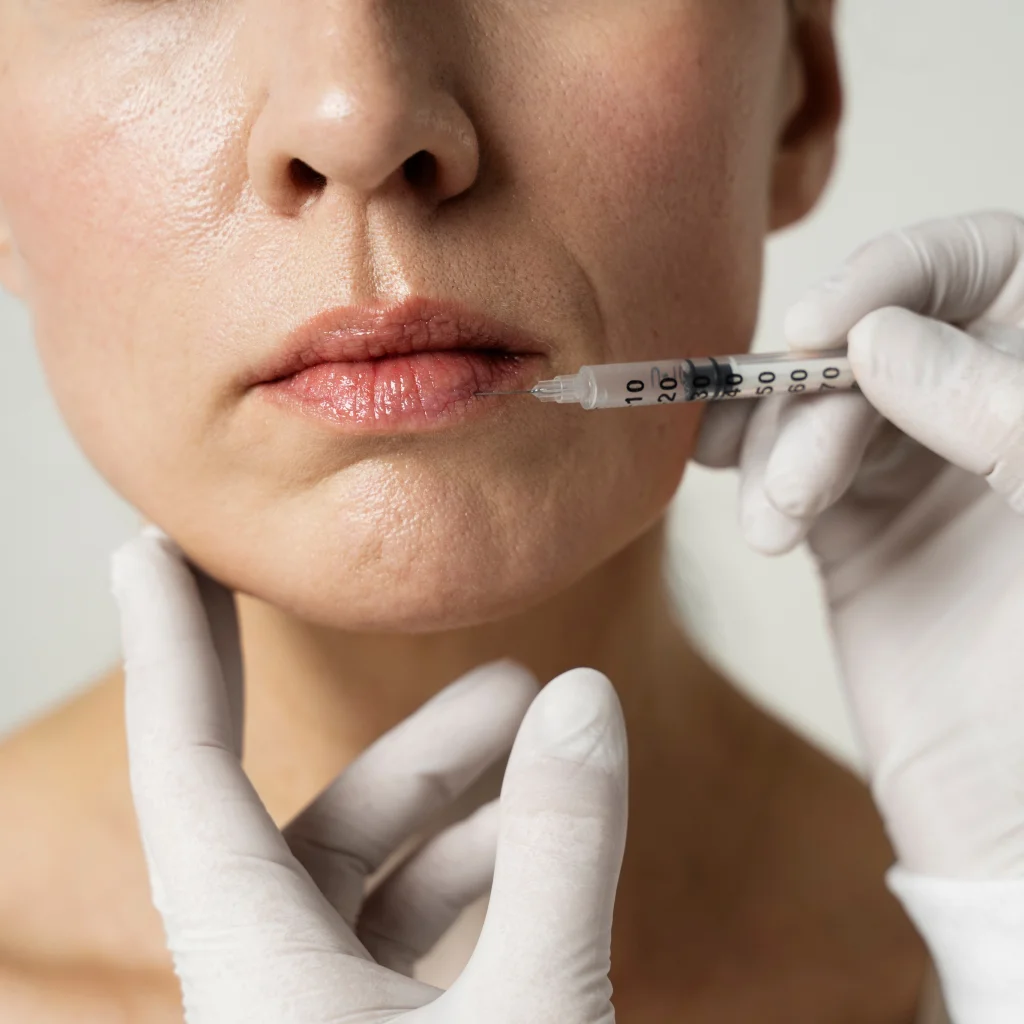
Facial fat grafting — also known as fat transfer, fat injection, or facial lipofilling — restores lost facial volume using your own purified fat.
A small amount of fat is usually collected from an area such as the abdomen, waist, or thighs using gentle liposuction techniques. The harvested fat is then carefully processed and purified before being injected into selected areas of the face.
Unlike conventional dermal fillers, facial fat grafting uses your own tissue rather than a manufactured injectable material.
The goal is not simply to make the face fuller. Modern facial fat grafting focuses on restoring volume precisely where it has been lost while maintaining natural facial proportions.
What Can Facial Fat Grafting Improve?
Facial aging often involves gradual volume loss. Restoring that volume strategically can soften hollow areas and create a more balanced, refreshed appearance.
Hollow Temples
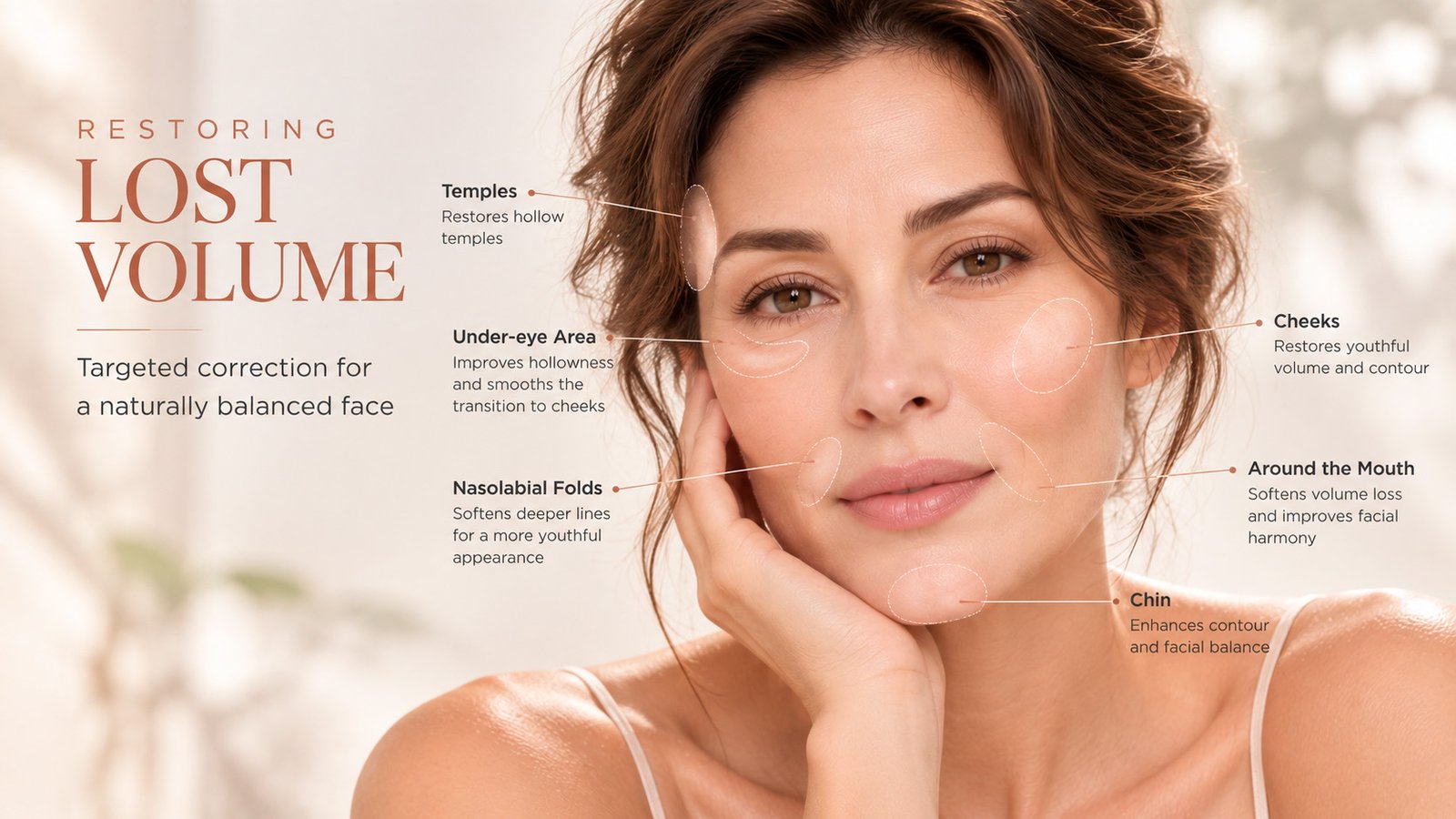
Restoring volume can soften a hollow or skeletal appearance and create a smoother transition between the forehead and cheeks.
Flat or Deflated Cheeks
Carefully placed fat can restore youthful cheek volume and improve the natural contours of the midface.
Under-Eye Hollows
In selected patients, small amounts of fat can soften hollowness beneath the eyes and improve the lower eyelid-to-cheek transition.
Nasolabial Folds
Volume restoration around the midface and folds may reduce the appearance of deeper lines extending toward the mouth.
Chin & Facial Contours
Strategic fat placement may improve facial proportions and create smoother contours around the chin and lower face.
Overall Volume Loss
Fat can be distributed across several areas when generalized facial deflation contributes to an older or tired appearance.
Where Can Fat Be Added?
Facial fat grafting is highly customizable. The surgeon evaluates the entire facial structure and determines where additional volume can create the most natural improvement.
Several areas can often be treated during the same procedure. Successful facial fat grafting is usually about precise volume restoration rather than excessive filling.
How Does Facial Fat Grafting Work?
The procedure consists of three essential stages: harvesting, purification, and precise placement.
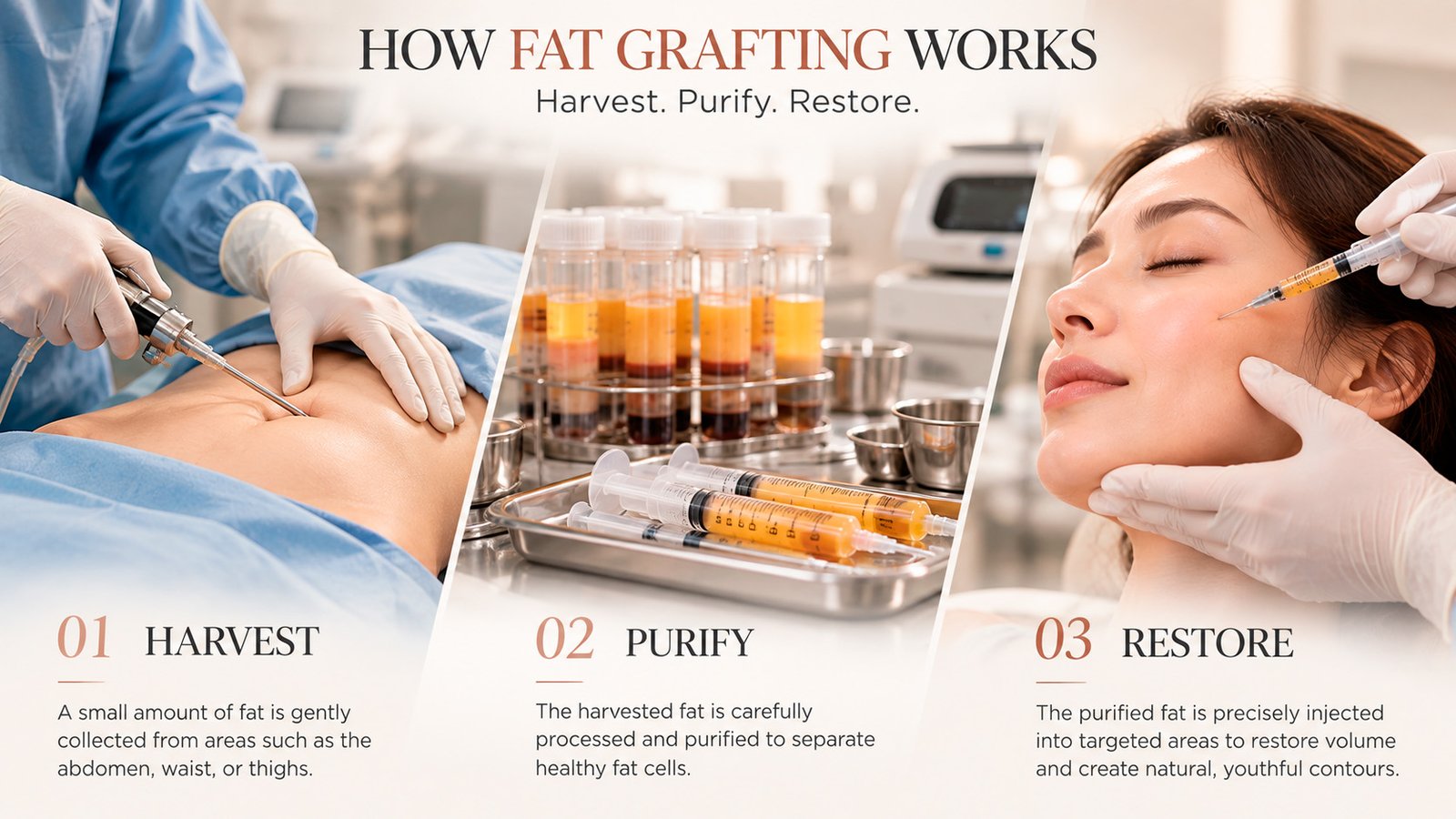
Fat Harvesting
A small amount of fat is collected from a donor area, commonly the abdomen, waist, or thighs, using gentle liposuction techniques.
Fat Purification
The harvested material is carefully processed so suitable fat can be separated and prepared for transplantation.
Precise Injection
Tiny amounts of purified fat are distributed through selected tissue layers to create smooth, natural-looking facial contours.
Facial Fat Grafting vs. Dermal Fillers
Both treatments can restore facial volume, but they serve somewhat different purposes.
Facial Fat Grafting
Fat grafting can be particularly suitable when several facial areas require volume restoration. A portion of transferred fat that successfully establishes a blood supply can remain long term.
- Uses your own fat
- Suitable for broader volume restoration
- Natural tissue consistency
- Potentially long-lasting surviving fat
- Requires harvesting and recovery
Dermal Fillers
Fillers require no fat harvesting and generally involve less initial recovery. They can be useful for precise correction of smaller areas or for patients who prefer a non-surgical treatment.
- No donor area required
- Quick treatment
- Precise small-volume correction
- Less initial downtime
- Most commonly used fillers are temporary
There is no single option that is best for everyone. Your doctor can determine which approach — or combination of treatments — is most appropriate for your anatomy and goals.
Natural-Looking Volume Is the Goal
Youthful faces are not simply “full.” They have balanced volume distributed across specific anatomical areas.
An experienced surgeon evaluates your face as a whole rather than simply filling individual hollows.
The objective is to restore facial harmony while preserving your individual features — not to create an artificially overfilled face.
Recovery & Results
Recovery varies depending on the amount of fat transferred and whether fat grafting is performed alone or together with another facial procedure.
Swelling is expected. Some patients may also experience bruising or temporary tenderness in the facial and donor areas.
The face may initially appear fuller than expected. Swelling gradually decreases and some transferred fat is naturally reabsorbed.
The remaining fat gradually integrates with surrounding facial tissues and the result becomes more stable.
Fat survival differs between patients and treatment areas. In some cases, an additional grafting session may be recommended.
How Long Does Facial Fat Grafting Last?
Fat cells that successfully survive transplantation can remain in the treated area for many years.
However, transferred fat behaves like other fat in your body. Significant weight gain or weight loss may therefore affect facial volume, and normal facial aging continues over time.
Facial fat grafting should be viewed as a long-term volume restoration procedure rather than a treatment that permanently stops the aging process.
Combining Fat Grafting With Facial Surgery
Facial aging often involves both tissue descent and volume loss. Combining procedures allows each component to be addressed appropriately.
Deep Plane Facelift
Repositions deeper facial tissues while fat grafting can restore selected areas of lost volume.
Face & Neck Lift
Improves facial and neck laxity while fat transfer can help create softer, more youthful facial contours.
Blepharoplasty
Eyelid surgery addresses excess skin or under-eye bags, while carefully selected fat grafting may improve surrounding volume loss.
Forehead & Brow Lift
Lifting can reposition descended tissues while fat grafting may restore volume to the temples or forehead when appropriate.
Who May Be a Good Candidate?
A consultation is necessary to determine whether facial fat grafting is appropriate for your anatomy, health, and aesthetic goals.
Facial Fat Grafting in Korea
South Korea is internationally recognized for facial rejuvenation, facial contouring, and aesthetic plastic surgery.
Korean plastic surgeons frequently approach facial aging as a combination of changes in skin, soft tissue, facial volume, and underlying facial structure rather than focusing on a single wrinkle or isolated area.
For international patients, facial fat grafting can be considered as an individual procedure or together with treatments such as blepharoplasty, forehead lifting, facelift, or neck lift.

Your Treatment Plan Should Be Individual
The amount and location of facial volume loss are different for every person. Your facial proportions, skin condition, previous procedures, existing volume, and personal goals should all be considered when planning treatment.
Send us your photos and treatment goals to receive preliminary recommendations from selected plastic surgery clinics in South Korea.
Get Your Personalized Treatment Plan →